Imagine two identical twins — same DNA, same upbringing, same everything on paper. Somehow, only one develops cancer. Geneticists don’t have a clean answer for that, since the usual risk factors are supposed to line up when the genes do. A new research effort thinks the answer might be hiding somewhere else entirely: in their blood.
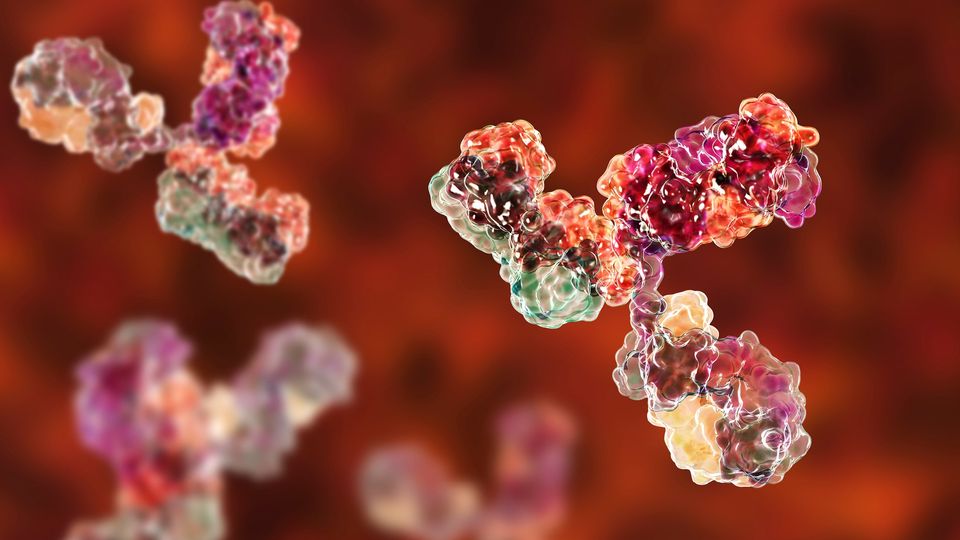
A $25 million international project described in Cell is testing exactly that idea. A collaboration called ATLAS wants to find out whether the immune system itself decides who develops cancer, one antibody at a time. Specifically, researchers are hunting for “self” antibodies — proteins that mistakenly target the body’s own tissue instead of outside invaders. Some of these antibodies may protect against cancer. Others may quietly disarm the immune system and let a tumor take hold.
The idea didn’t come out of nowhere. It grew out of COVID-19 research, where scientists discovered that certain self-antibodies blocked the immune system’s antiviral defenses and drove a large share of severe COVID deaths. Now they’re asking the same question about cancer.
For two decades, cancer immunology chased T cells and checkpoint inhibitors. Nobody paid much attention to antibodies that target the body’s own proteins. Doctors still assess cancer risk with population-level averages: age, family history, smoking history, a handful of inherited mutations. None of that tells a clinician what a patient’s own immune system is doing in real time.
That gap matters more than it sounds. A patient can carry every so-called high-risk factor and never develop cancer. A patient with none of them can develop an aggressive one. Risk-factor categories don’t explain individual outcomes — they never did. Researchers built them to guide population screening, not to rule a person in or out at the bedside.
Inside the Hunt for Cancer-Linked Self Antibodies
Here’s how the hunt works. The ATLAS team will scan blood samples against more than 20,000 known human proteins, building a full catalog of self-antibodies. They’re starting with 16,000 carefully chosen participants: identical twins where only one developed cancer, heavy smokers and genetically high-risk people who never got the disease, centenarians, and cancer patients before and after immunotherapy. If early results look promising, the team plans to expand testing to more than 50,000 additional people.
Immunologist Jean-Laurent Casanova called it “a fishing expedition, but in a good way.” That’s accurate. Nobody knows yet what they’ll find. But the premise alone should make anyone pause before trusting today’s risk categories to explain away a symptom.
ATLAS won’t produce a clinical test for years. Its real value today isn’t a new screening tool — it’s rather a reminder that the risk factors are broad categorizations.
Delayed cancer diagnosis is a common claim in medical malpractice cases. Often the pattern looks like this: a provider sees a patient who doesn’t fit the expected profile — a nonsmoker, someone with no family history, someone “too young” — and skips the workup that a higher-risk patient would get automatically or overlooks troubling symptoms becasue the patient doesn’t fit a certain profile. The provider chalks the symptom up to something else. The cancer keeps growing.
Research like this confirms what oncologists already understood: risk-factor categories were never a substitute for evaluating the patient in front of you. Washington’s standard of care already reflects that — a reasonably prudent provider works up concerning symptoms on their own merits, not on how well a patient matches a statistical profile. That standard doesn’t wait for ATLAS to publish results.
So the harder question isn’t whether ATLAS will change medicine someday. It’s what happens right now, in exam rooms everywhere, when a patient’s risk profile says “unlikely” and their body says otherwise. That’s not a five-year-away problem. It’s a today problem — and it’s one the standard of care already covers.