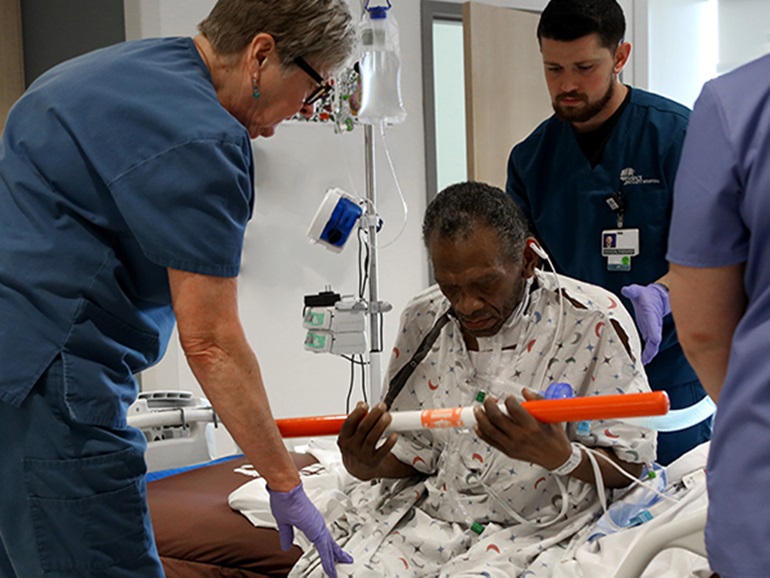
Medical negligence litigation captures some of what a patient loses — but rarely all of it. Economic damages and lost wages matter, yet they miss some thing harder to quantify. For example, what happens to a person after a prolonged and traumatic hospitalization? Research now gives that something a name — Post-Intensive Care Syndrome, or PICS.
More than 5 million people enter intensive care annually, and yet research shows that more than half carry lasting aftereffects home with them. Critical care physicians increasingly recognize PICS as an expected consequence of extended ICU stays — yet it remains almost entirely unknown to the general public, to jurors, and often to the very patients suffering from it.
The condition attacks on multiple fronts. Symptoms span from physical — weakness, pain, neuropathy — to psychological, including anxiety, depression, and cognitive difficulties like memory loss and poor concentration. Additionally, PTSD strikes ICU survivors at rates comparable to combat veterans. These are not temporary inconveniences. They are real, measurable disabilities with documented clinical mechanisms that persist long after discharge.
This distinction matters enormously in negligence cases. When a provider’s error forces a patient into a prolonged ICU stay, the damages do not stop at discharge. The assumption that patients will return to normal within a few weeks simply does not comport with reality. The person who walks out of the hospital is often not the same person who walked in.
In a medical malpractice case, we must contemplate the full universe of damages that negligence produces. PICS reminds us that some of the most tragic consequences of a long-term hospitalization are real, nameable, and recoverable. Naming the harm is often the first step toward proving it — and a recognized clinical diagnosis is a powerful tool in the hands of a negligence attorney. Ignoring it means leaving real damages on the table.