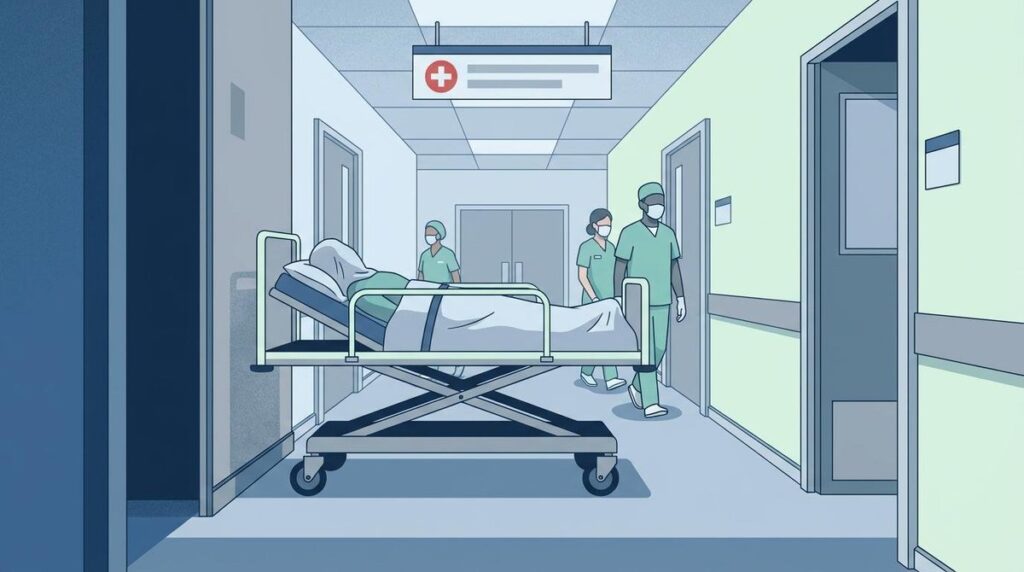
When a doctor says, “You’re being admitted,” most people picture a hospital bed. For a growing number of patients, what they get instead is a hallway stretcher — sometimes for hours, sometimes for days.
Doctors call this emergency department boarding, and federal health officials have labeled it a public health crisis. It happens when patients approved for admission remain stuck in the emergency department because no inpatient bed is available. Patients sick enough to require inpatient care can wait in the ED for hours, days, or even weeks — and boarding contributes to increased mortality, medical errors, and prolonged hospital stays.
The human cost is hard to overstate. In a recent Atlantic article, physician and journalist Elisabeth Rosenthal recounts her husband’s final weeks with metastatic cancer, including four days boarding in the ED before he finally received a proper hospital room. Her account captures what data cannot — the indignity of dying on a corridor stretcher, waiting for a bed that should already exist.
Boarding rates for patients aged 65 and older have risen sharply since the pandemic. In some emergency departments, boarded patients now outnumber the ones doctors are actively treating. Doctors and nurses say the situation pushes them to deliver inadequate care — and nobody is walking away unaffected.
The problem isn’t operational; it’s structural. Hospital administrations control inpatient bed allocation, and ED boarding is largely a product of today’s business models and financial pressures. Hospitals prioritize elective, higher-margin admissions, leaving emergency patients to absorb the consequences.
Starting in 2027, the Centers for Medicare and Medicaid Services will push hospitals to report boarding times voluntarily. By 2028, reporting becomes mandatory. By 2030, poor performers face penalties. That timeline offers little comfort to anyone beside a loved one on a hallway stretcher — or to anyone already harmed by care no hospital should accept.
The system knows this problem exists. The harder question is whether it has any urgency to solve it.