Half of all Patient Harm is Preventable
Half of all injuries suffered by patients is preventable. Of those injuries, 12% are considered severe.

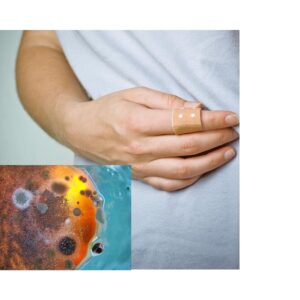 Fungus is not a plant, nor an animal, nor a bacterium. It is its own beast: a microscopic substance all around us. Types of fungi include yeast, mushrooms, lichen, truffles, and mold.
Molds are very small organisms that live just about anywhere. They thrive on moisture, and they reproduce through spores that travel in the air. Molds are around us nearly all the time, and usually harmless in small amounts. In fact, most of us breathe in mold spores every day, with no ill effects.[2] One kind is Aspergillus, a common mold that is lives indoors and outdoors.
Sometimes, however, mold like Aspergillus can be a problem, even a deadly one. For example, some people are immunocompromised – their immune system is weak and unable to fight off mold infections if they occur. For these people, it’s very important that they minimize any chance that they breathe in mold. Because if they do, it can result in a life-threatening disease called Aspergillosis, which can infect a patient’s lungs, sinuses, and other parts of the body.
Other times, even people with very healthy immune systems can become infected by Aspergillus in operations. In most operations, a surgeon is cutting a patient open. When a patient has an open surgical site, it’s very important that nothing accidentally get into it like bacteria or mold. That is because even patients with healthy immune systems have difficulty with a surgical site infection. Surgical site mold infections, particularly those in the heart, brain and spinal cord, can be devastating to patients and their families.
Because of this, hospitals where operations occur are required to adhere to rules that minimize the chances of a surgical site infection. These rules include the medical providers washing their hands, wearing sterile gowns, and using sterile equipment. It also includes eliminating bacteria and mold from their air.
Below are a couple of videos featuring a related lawsuit headed up by CMG Law