Many people put off colorectal cancer screening for one reason. They dread the colonoscopy. As a result, that fear keeps appointments unscheduled and cancers undetected.
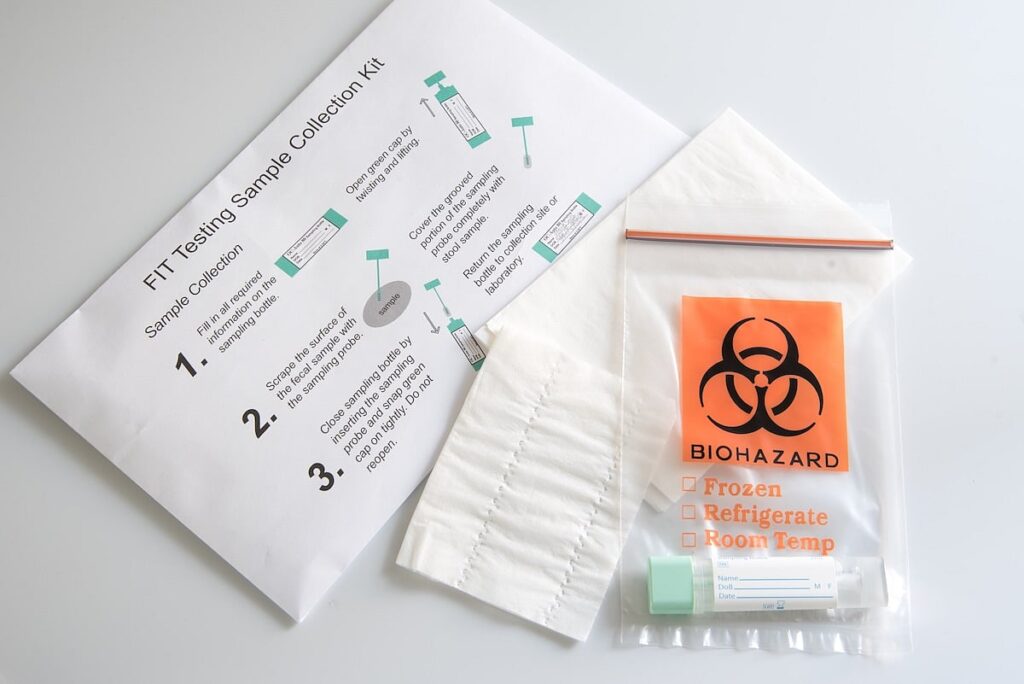
But a colonoscopy is not the only way to screen. The CDC lists several options, including stool-based tests. One of them, the fecal immunochemical test (FIT), checks a stool sample for hidden blood. First, patients collect the sample at home. Then they mail it to a testing center.
A new study in JAMA asks a practical question. Can a mailed FIT program raise screening rates and keep them up?
Colorectal cancer ranks second among cancer deaths in the U.S. Screening can stop it early, and it can lower the number of new cases. Yet many people never get screened, especially in low-income and minoritized communities.
Researchers tested a mailed FIT program in 16 clinics in San Diego County. The clinics belong to two federally qualified health centers that serve patients who often struggle to get care. Most had Medicaid. The trial followed 20,250 patients, ages 50 to 75, for three years.
Each year, the program mailed patients who were behind on screening an information packet. Next came a FIT kit with a letter, instructions, and a prepaid return envelope. Finally, patients who did not respond got phone and text reminders. Everything came in English and Spanish.
What the Colorectal Cancer Screening Study Found
The early results were strong. After two years, about 38% of patients at clinics with the program were up to date on screening. At clinics without it, only 27% were. That means 11 more people out of every 100 were up to date.
The pandemic hit screening hard. At clinics with the program, screening held steady. Meanwhile, at clinics without it, the share of patients up to date fell from about 40% to 27% over those two years.
Then the program’s lead faded. By year three, about 39% of patients at clinics with the program were up to date, compared with about 37% at the others. That difference was small enough that it could be due to chance.
What changed? The authors cite a plan change caused by limited resources. The third round of mailings went out early, so some patients who had already returned a kit were not yet due for another. They got no invitation that round.
The researchers conclude that mailed kits can help health centers that serve at-risk communities. However, they say programs need steady follow-through and ongoing support to keep those gains.
Washington health centers have tried this approach, too. HealthPoint, a partner of the Washington State Department of Health, ran a direct-mail FIT program at nine medical clinics. It mailed 5,178 FIT kits and followed up with reminder letters and automated phone calls. Overall, about 31% of the kits came back.
Every screening that happens early gives doctors a better chance to find cancer sooner. What does a late-stage diagnosis cost a family in treatment, lost income, and debt? Could outreach to low-screening communities spare more families that strain?
Those questions matter most for patients who rely on community health centers. After all, a mailed test only helps if someone sends it, reads the result, and acts on it.
If a provider breaks that chain, the delay can fuel a medical malpractice case. Under the law, providers must meet a standard of care. Would a patient told only about colonoscopy know that other screening tests exist?
The study also raises a harder question. When outreach starts strong and then fades, who answers for the patients left behind?